

How Can an Irrigation Audit Lower Your Monthly Water Bill in Lubbock?
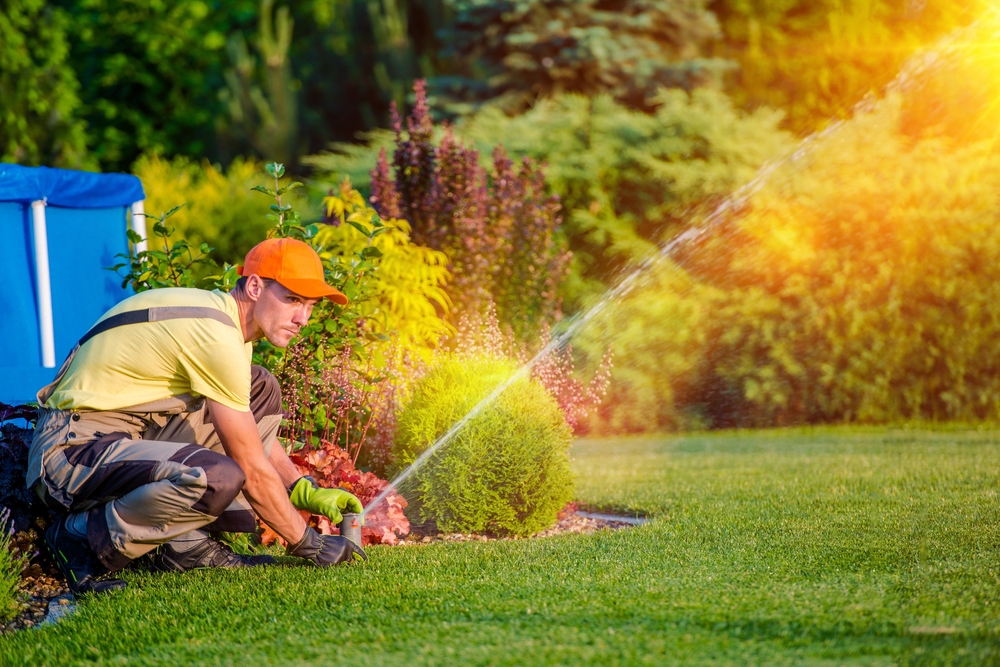
If you have ever looked at your water bill during the summer months and wondered where all that money is going, your sprinkler system might be the answer. Homeowners and business owners in Lubbock, TX deal with some of the most demanding climate conditions in the state, and keeping landscapes alive without overspending on water is a real challenge. An irrigation audit is one of the most practical and cost-effective steps you can take to get your water use under control and start seeing meaningful savings every single month.
What Is an Irrigation Audit and Why Does It Matter in Lubbock?
An irrigation audit is a thorough evaluation of your sprinkler system performed by a trained technician who examines every component of your setup, from the controller and valves to the heads and distribution patterns. The goal is to identify inefficiencies, leaks, overlapping zones, and coverage gaps that cause your system to use far more water than necessary.
In Lubbock, TX, this kind of evaluation carries extra weight. The region sits in the southern High Plains, where hot summers, persistent winds, and occasional drought conditions put serious pressure on irrigation systems. Because water is a finite and increasingly expensive resource in West Texas, wasting it through a poorly calibrated system is not just bad for your wallet. It is also bad for the community. A professional irrigation inspection helps you understand exactly how your system is performing and what adjustments can be made to bring it in line with your actual landscape needs.
Lubbock residents are also subject to watering restrictions during certain parts of the year, meaning an inefficient system can put you at risk of running afoul of local water conservation rules. An audit helps you stay compliant while still keeping your lawn and garden healthy.
The Hidden Ways Your Sprinkler System Could Be Wasting Water
Most homeowners assume that if their sprinklers are running and the grass looks green, everything must be working fine. Unfortunately, sprinkler system efficiency is about much more than whether the heads are spinning. There are numerous ways a system can waste significant amounts of water without any obvious signs.
Misdirected heads are one of the most common culprits. When a sprinkler head is pointed slightly off course, it can end up watering your sidewalk, driveway, or the street instead of your lawn. Over time, this adds up to thousands of gallons of wasted water per season. Pressure issues are another major factor. Systems running at too high a pressure produce a fine mist that evaporates quickly in Lubbock’s dry, windy conditions before it ever reaches the root zone. Systems running at too low a pressure fail to distribute water evenly, creating dry patches that tempt homeowners to run their systems longer than necessary.
Leaking valves, cracked pipes, and worn-out seals are also frequent findings during a professional irrigation inspection. Some of these leaks are underground and completely invisible to the naked eye, yet they can account for a substantial portion of your monthly water usage. Scheduling errors are equally problematic. Many systems are set up once and then never adjusted for seasonal changes, meaning your irrigation controller might be running summer cycles all through the cooler spring and fall months when your landscape needs far less water.
What Happens During a Professional Irrigation Inspection?
When you schedule a professional irrigation inspection in Lubbock, TX, a certified technician will walk through a systematic process designed to evaluate every aspect of your system’s performance. The inspection typically begins with a review of your current scheduling and controller settings, followed by a zone-by-zone activation to observe how each section of your system performs in real time.
The technician will check water pressure at various points in the system to identify irregularities that affect distribution. They will also measure the output of your sprinkler heads using catch cans placed throughout each zone. This process, known as distribution uniformity testing, reveals whether water is being applied evenly or if certain areas are receiving too much or too little coverage. Sprinkler system efficiency depends heavily on this kind of balanced distribution.
The inspector will look for physical damage to heads, pipes, and valves, and will check for signs of underground leaks by monitoring flow rates. Once the field evaluation is complete, you will receive a detailed report outlining what was found and what changes are recommended. These recommendations can range from simple adjustments like repositioning a head or updating your schedule, to more involved repairs like replacing a faulty valve or upgrading to a smart irrigation controller that adjusts automatically based on weather data.
Water-Saving Landscaping Strategies That Work Hand in Hand With an Audit
An irrigation audit does not exist in a vacuum. The findings from your inspection pair naturally with broader water-saving landscaping strategies that can dramatically reduce your overall water consumption in Lubbock, TX. When you understand where and how your system is wasting water, you can make smarter decisions about your landscape design and plant selection as well.
One of the most effective approaches is converting portions of your yard to drought-tolerant or native plants. Lubbock sits within the native range of many grasses and flowering plants that have adapted over thousands of years to survive on minimal rainfall. These plants typically require significantly less irrigation than traditional turf grass once they are established, and they tend to hold up much better under the region’s intense summer heat.
Mulching is another water-saving landscaping technique that works in harmony with a well-tuned irrigation system. A thick layer of organic mulch around trees, shrubs, and garden beds slows evaporation, keeps soil temperatures lower, and reduces how often you need to water. In Lubbock’s climate, where surface soil can dry out quickly on a windy afternoon, mulch can be a surprisingly powerful water conservation tool.
Soil aeration is also worth considering as part of your overall water-saving landscaping plan. Compacted soil prevents water from penetrating deeply enough to reach root zones, which means your irrigation system has to work harder and run longer to produce any meaningful benefit. Aerating your lawn allows water to move more efficiently into the ground, which directly improves the return you get from every minute your sprinklers run.
How Much Money Can You Actually Save After an Irrigation Audit in Lubbock?
This is the question most homeowners care about most, and the answer is genuinely encouraging. According to the Environmental Protection Agency, irrigation accounts for nearly one-third of all residential water use in the United States, and a significant portion of that water is wasted through inefficiency. Studies have shown that a properly calibrated irrigation system can reduce outdoor water use by 15 to 30 percent or more.
For Lubbock homeowners, that kind of reduction can translate into real dollar savings each month, particularly during the peak summer season when sprinkler systems are running frequently. If your household is currently spending several hundred dollars per month on water during the summer, even a 20 percent reduction represents meaningful savings over the course of a season. Multiply that across multiple years, and the return on a one-time irrigation audit becomes very clear.
Beyond the direct savings on your water bill, a well-maintained and properly calibrated system also extends the life of your equipment. Heads, valves, and controllers that are not being pushed beyond their design parameters last longer, which means fewer costly repairs and replacements over time.
Conclusion
An irrigation audit is one of the smartest investments a Lubbock, TX homeowner can make when it comes to managing water costs. By identifying inefficiencies, correcting mechanical issues, and pairing your findings with smart water-saving landscaping choices, you can significantly reduce what you spend on water every month without sacrificing the health or appearance of your landscape. If you have not scheduled a professional irrigation inspection yet, now is a great time to get ahead of the summer season and start saving.