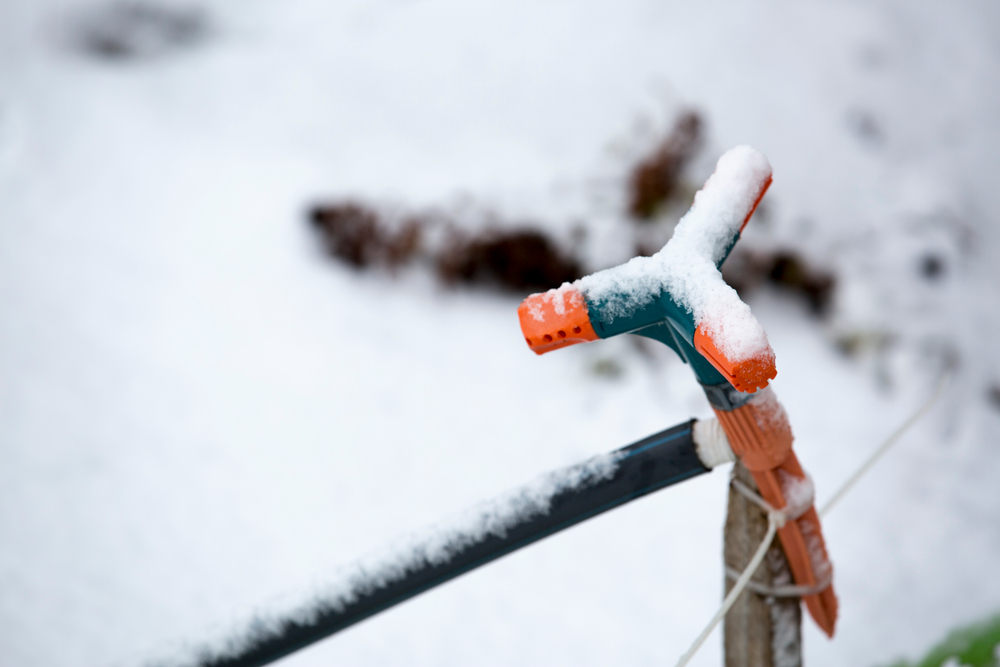
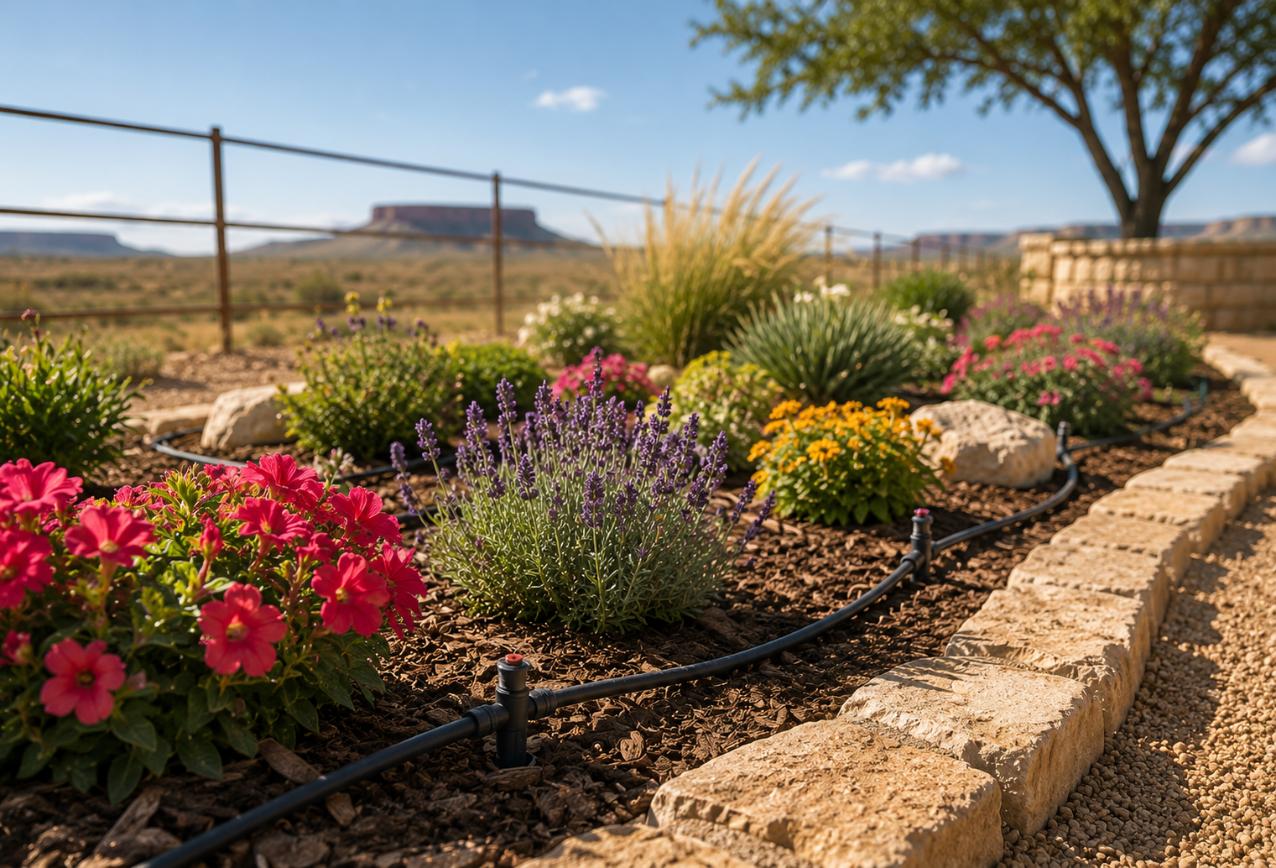
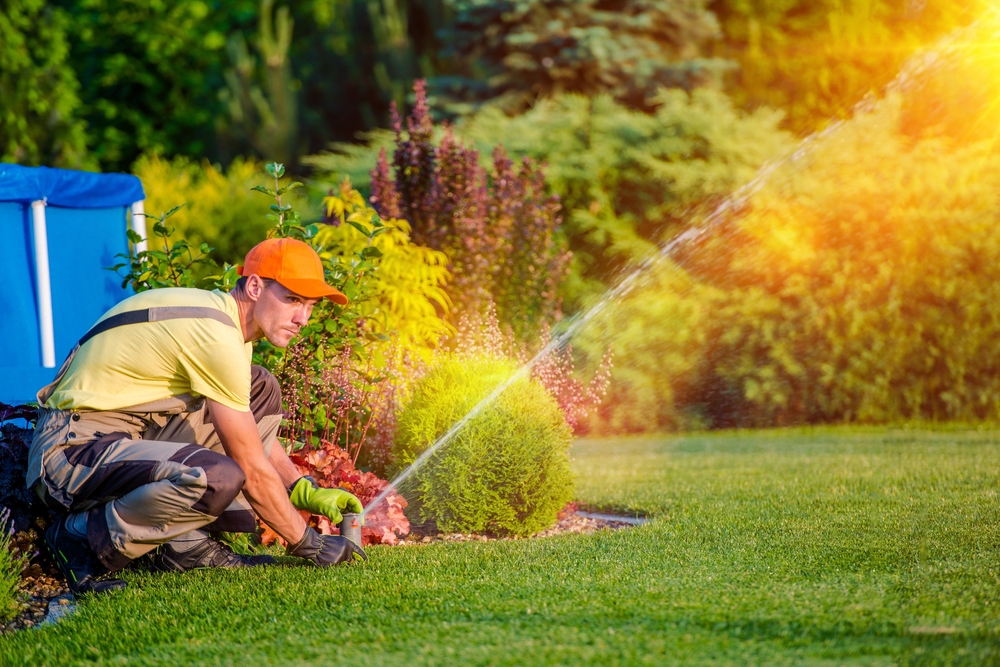
Fall on the South Plains can shift from warm afternoons to freezing nights quickly. For Lubbock property owners, that temperature swing can leave irrigation valves, backflow components, and exposed piping vulnerable if water remains trapped in the system.
Quick answer: Winterizing a Lubbock irrigation system means shutting down unnecessary watering, protecting exposed components, draining vulnerable areas, and determining whether compressed-air blowout is appropriate for the system. The National Weather Service lists October 31 as Lubbock’s average first fall freeze, but freezes have historically occurred earlier. Preparing before freezing weather arrives is safer than waiting for the first cold night.
What local property owners should know
Irrigation winterization should be completed before a significant freeze, not after exposed components have already frozen.
Lubbock’s average first fall freeze is October 31 according to National Weather Service climate records, making October an important preparation month.
South Plains wind can increase exposure around above-ground pipes, valves, and backflow equipment.
Simply turning off the irrigation controller does not necessarily remove water trapped inside vulnerable components.
Compressed-air blowouts require the correct pressure and procedure for the specific system, so they are not automatically a safe DIY project.
Why Irrigation Winterization Matters in Lubbock
Irrigation winterization matters in Lubbock because freezing temperatures can damage water-filled components even after the lawn’s regular watering season has slowed down. Above-ground assemblies and other exposed parts are especially important to protect before a strong cold front reaches the South Plains.
The National Weather Service reports an average first fall freeze of October 31 for Lubbock, while its historical records include a first freeze as early as October 7. That variation is a good reason to prepare based on seasonal risk rather than a single calendar date.
Properties around Lubbock County, Wolfforth, Shallowater, and the broader South Plains also deal with persistent wind and exposed landscapes. Components sitting above grade or in poorly protected locations can be more vulnerable than buried irrigation lines.
At Jet Landscape And Irrigation, we help local property owners address irrigation needs with the realities of West Texas landscapes in mind. For winter preparation, our focus is identifying vulnerable components and determining the appropriate shutdown and freeze-protection approach for the individual system.
Local Freeze Data and Seasonal Timing
The best time to winterize is before Lubbock reaches its typical late-October first freeze, while still allowing for the possibility of earlier cold weather. National Weather Service records place the average first fall freeze on October 31 and show that an October freeze can arrive considerably earlier.
Texas A&M AgriLife Extension also advises Texans to prepare vulnerable pipes before freezing weather and notes that direct wind exposure can accelerate freezing.
For local homeowners, that makes early to mid-October a sensible time to inspect the irrigation system and plan winterization. Waiting until a freeze warning is issued can leave little time to find damaged insulation, exposed valves, or other problems.
How Freezing Weather Can Affect Your Irrigation System
Freezing weather can damage irrigation components when trapped water expands inside confined spaces. The resulting stress may crack fittings, damage valves, affect backflow equipment, or create leaks that do not become obvious until the system is used again.
That can turn a fall maintenance issue into a spring repair problem. A damaged component may leak when irrigation resumes, while an underground problem can contribute to soggy areas, poor pressure, or uneven sprinkler performance.
In neighborhoods such as Tech Terrace, Raintree, and areas near LakeRidge, system layouts and equipment ages can vary widely. Winterization should account for the actual design and exposed components rather than relying on one procedure for every property.
Warning Signs Your System Needs Attention Before Winter
Warning signs before winter include exposed water-filled components, existing leaks, damaged insulation, and irrigation equipment that does not shut down correctly. Addressing these conditions before a freeze can reduce the chance of discovering additional damage later.
Watch for:
Cracked, loose, or deteriorated insulation around exposed piping.
Water dripping from valves, fittings, or backflow-related components.
Sprinkler zones that continue running after they should shut off.
Valve boxes holding standing water.
Visible cracks or previous repairs around exposed irrigation equipment.
Unusual pressure changes between sprinkler zones.
A controller that has not been adjusted from its summer schedule.
Above-ground piping that is directly exposed to West Texas wind.
When to Call an Irrigation Professional
Professional irrigation service is appropriate when winterization involves compressed air, unfamiliar valves, backflow components, existing leaks, or uncertainty about how the system was installed. Homeowners can inspect visible equipment and adjust controller settings, but incorrect pressure or valve operation can damage irrigation components.
A blowout is not simply a matter of connecting a large compressor and forcing air through the sprinkler heads. The system configuration, air volume, pressure, zones, and components all matter.
If you recently purchased a home in Lubbock County and do not know the irrigation layout, a professional inspection can also help identify shutoffs and vulnerable components before freezing weather arrives.
Common Local Causes of Freeze Damage
The most common local freeze risks involve trapped water, exposed equipment, inadequate protection, and delayed winterization. Lubbock’s temperature swings and open South Plains conditions can make these weaknesses more noticeable during cold weather.
1. Water trapped in exposed components: Water left inside vulnerable valves, fittings, or assemblies can freeze and expand.
2. Missing or deteriorated insulation: Old insulation may split, loosen, or leave sections of pipe exposed.
3. Waiting for the first hard freeze: A sudden cold front can arrive before a property owner has prepared the system.
4. Improper blowout procedures: Excessive compressed-air pressure can create a different type of system damage.
5. Existing irrigation problems: A small fall leak or malfunction may become a larger issue after winter weather.
Fall Irrigation Prevention and Maintenance
Fall irrigation maintenance should focus on reducing unnecessary watering, inspecting exposed components, protecting vulnerable equipment, and completing any needed winterization before freezing weather. October is a practical month for Lubbock property owners to make these checks.
Start by reviewing the controller as turf and landscape water demand decreases. Walk the property and inspect valve boxes, visible piping, sprinkler heads, and exposed assemblies. Look for leaks, broken components, missing covers, and deteriorated insulation.
Do not assume that shutting off the controller completely winterizes the system. Likewise, avoid using compressed air unless you understand the system’s requirements and can perform the procedure safely.
What to Expect After Proper Winterization
Proper winterization should leave vulnerable irrigation components better protected from freeze conditions and the system ready for an orderly spring startup. It cannot guarantee that no winter damage will occur, but it addresses preventable risks associated with trapped water and exposed equipment.
When warmer weather returns, the system should still be inspected before returning immediately to a full watering schedule. A spring startup provides an opportunity to check pressure, valves, sprinkler heads, coverage, and leaks that may have developed over winter.
Common Winterization Mistakes
The biggest winterization mistakes are waiting too long, assuming the controller is the only concern, and using compressed air incorrectly. Each can create avoidable problems for a West Texas irrigation system.
Mistake: Waiting for a freeze warning. Consequence: There may not be enough time to inspect or service vulnerable equipment. Better approach: Prepare during October and monitor South Plains forecasts.
Mistake: Only switching the controller off. Consequence: Water may remain in exposed or vulnerable components. Better approach: Evaluate the complete irrigation system.
Mistake: Using excessive compressed air. Consequence: Pressure can damage components. Better approach: Use the correct procedure for the specific system or schedule professional service.
Mistake: Ignoring a small existing leak. Consequence: Winter conditions can complicate an already damaged system. Better approach: Repair known irrigation problems before seasonal shutdown.
A Common Lubbock Irrigation Scenario
A common Lubbock scenario is a homeowner who stops watering in fall and switches off the controller but leaves exposed irrigation components unchanged. A strong cold front then pushes overnight temperatures below freezing while water remains inside vulnerable parts.
The homeowner may not notice a problem immediately. When the system starts again in spring, a leak, pressure issue, or damaged fitting becomes apparent.
This is not a case study of a specific customer. It illustrates why fall winterization involves more than changing the controller setting.
Irrigation Services That Support Freeze Protection
Irrigation inspection, repair, seasonal shutdown, and appropriate winterization services can help address freeze-related risks before cold weather arrives. The right service depends on the design, condition, and exposed components of the property’s irrigation system.
We can evaluate irrigation concerns and help determine which steps are appropriate for the system rather than applying the same procedure to every property.
DIY winterization works best for basic visual checks and controller adjustments, while professional service is the better choice when the process involves compressed air, system diagnosis, repairs, or unfamiliar components. The decision should be based on system complexity rather than convenience alone.
Homeowners can safely look for visible leaks, inspect insulation, clear obvious debris, and review controller schedules. Professional help becomes more valuable when a valve will not close, equipment is leaking, the system layout is unknown, or a blowout is needed.
Irrigation Winterization Service Areas
Our irrigation work serves Lubbock and surrounding communities where West Texas freeze conditions can affect residential and commercial landscapes. Property owners in nearby areas such as Wolfforth and Shallowater should also prepare irrigation equipment before seasonal freezes.
Across Lubbock County and the South Plains, the goal is the same: address vulnerable irrigation components before cold weather creates an avoidable repair.
The Cost of Ignoring Freeze Protection
Ignoring freeze protection can turn a manageable fall maintenance task into damaged fittings, leaking valves, backflow-related problems, or spring irrigation repairs. The exact repair cost depends on what freezes, where the damage occurs, and how easily the affected component can be accessed.
Hidden damage can also waste water once irrigation resumes. A spring leak may continue until someone notices unusual runoff, soggy soil, low pressure, or poor sprinkler coverage.
FAQ About Winterizing Irrigation Systems in Lubbock
When should I winterize my irrigation system in Lubbock?
Plan irrigation winterization during October and before freezing weather arrives. The National Weather Service lists October 31 as the average first fall freeze for Lubbock, but historical freezes have occurred earlier. Checking the system in early to mid-October provides more preparation time.
Does every Lubbock sprinkler system need a blowout?
No, not every irrigation system necessarily requires the same blowout procedure. System design, drainage, exposed components, valves, and installation details all matter. A professional can determine whether compressed-air winterization is appropriate rather than assuming every property needs an identical service.
Can I winterize my sprinkler system myself?
You can handle basic tasks such as inspecting visible components and adjusting controller settings if you understand your system. Compressed-air blowouts and work involving unfamiliar valves or backflow equipment require greater care because incorrect operation or excessive pressure can damage irrigation components.
Why is wind important for irrigation freeze protection in West Texas?
Wind matters because exposed pipes and irrigation components can lose heat rapidly during cold conditions. Texas A&M AgriLife specifically recommends shielding vulnerable pipes from direct wind. That consideration is particularly relevant across the open, windy landscapes common around the South Plains.
Is turning off my irrigation controller enough before a Lubbock freeze?
No. Turning off the controller prevents scheduled watering, but it does not automatically remove water from vulnerable parts of the irrigation system. Exposed piping, valves, and other components should be evaluated separately so freeze protection addresses more than the electronic schedule.
What should I inspect after winter in Lubbock County?
Inspect the system for leaks, damaged sprinkler heads, valve problems, unusual pressure, and uneven coverage before returning to regular watering. A controlled spring startup can reveal winter-related problems without immediately placing the entire irrigation system back on its warm-season schedule.
Can a sprinkler freeze cause a leak that appears later?
Yes. Freeze-related damage may not become obvious until water pressure returns to the affected component. That is why spring startup should include an inspection for dripping fittings, unexpected wet areas, pressure changes, and sprinkler zones that do not operate normally.
Should commercial properties winterize irrigation systems too?
Yes. Commercial properties should evaluate irrigation freeze protection because damaged components can create leaks, landscape problems, and maintenance disruptions. Larger properties may also have more zones and components to inspect, making a planned fall shutdown especially useful before South Plains freezing weather.
Protect Your Irrigation System Before Lubbock’s Next Freeze
Fall preparation can reduce preventable freeze exposure and make spring irrigation startup easier. We can help you evaluate your system, identify vulnerable components, and determine the appropriate winterization approach for your property.
Hot, dry stretches on the South Plains can make a dependable sprinkler system feel essential, but running that system harder is not always the best answer. Mineral-rich water can gradually restrict sprinkler heads and valves at the same time drought conditions put additional pressure on lawns, planting beds, and irrigation equipment.
Quick answer: Protecting an irrigation system in Lubbock requires a combination of seasonal inspections, correct watering schedules, clean sprinkler nozzles, leak detection, pressure checks, and prompt attention to mineral buildup. Homeowners should watch for uneven spray patterns, white deposits, sticking valves, and dry areas rather than simply adding more watering time. Professional system checks can identify coverage, pressure, valve, and component problems before they waste significant water.
What local property owners should know
West Texas heat and irregular rainfall can expose weak irrigation coverage quickly, especially during prolonged dry periods.
The City of Lubbock’s 2025 Water Quality Report listed average water hardness at 169 parts per million, with reported results ranging from 81 to 244 ppm.
Properties in areas such as Tech Terrace, South Overton, Wolfforth, and Shallowater may have different landscape layouts, soil conditions, and irrigation demands.
Increasing sprinkler run time will not correct a clogged nozzle, broken head, leaking line, or poorly adjusted zone.
Checking the system before peak summer demand is usually easier than discovering a major coverage problem after turf and plants are already stressed.
Why Drought and Hard Water Matter to Local Irrigation Systems
Drought and hard water matter because they can create two different irrigation problems at the same time: landscapes need dependable moisture during dry periods while dissolved minerals can gradually interfere with the equipment delivering that water. In the South Plains, efficient distribution is especially important because wasted water may never reach the plants that need it.
National Weather Service climate normals show average annual precipitation of about 18.33 inches at Lubbock International Airport. The agency also describes the 1991-2020 climate period as warmer and drier than the previous 30-year normal.
Rainfall can also be highly uneven from one season to the next. For example, 2024 finished wetter than average overall, yet an exceptionally hot and dry second half of summer still stressed crops and vegetation across the region.
For Jet Landscape And Irrigation, that combination makes irrigation maintenance more than a matter of keeping grass green. We look at whether water is actually reaching the intended areas efficiently and whether the system is showing signs of wear, blockage, leakage, or poor adjustment.
What Local Water Data Says About Mineral Buildup
Local water data confirms that irrigation equipment is exposed to measurable concentrations of hardness minerals and dissolved solids, which means visible deposits around sprinkler components should not be ignored. The amount at an individual property can vary, but the municipal data provides useful context for understanding why mineral residue can appear over time.
The City of Lubbock’s 2025 Water Quality Report showed average hardness of 169 ppm, average calcium of 30 ppm, average magnesium of 23 ppm, and average total dissolved solids of 633 ppm. The report identifies hardness as naturally occurring and not regulated as a drinking-water contaminant.
Hard water itself does not automatically mean an irrigation system will fail. The practical concern is accumulation. As water repeatedly evaporates around exposed sprinkler openings and components, minerals can be left behind. Deposits may eventually contribute to restricted openings or interfere with moving parts.
How Drought and Scaling Affect Your Landscape
Drought and mineral scaling can reduce irrigation effectiveness by creating uneven watering, longer system run times, stressed plants, and unnecessary water loss. A zone may technically turn on while individual heads deliver weak, distorted, or incomplete patterns, leaving some parts of the landscape dry and others excessively wet.
On a lawn near Tech Terrace, that could appear as a dry strip between otherwise healthy sections of turf. On a larger property toward Wolfforth or southwest Lubbock County, poor pressure or a leaking zone might affect a much broader area before the problem becomes obvious.
The key is to evaluate distribution rather than assuming every dry spot requires more water.
Warning Signs Your Irrigation System Needs Attention
The clearest warning signs are changes in spray pattern, pressure, coverage, or water use that cannot be explained by normal seasonal adjustments. During a West Texas dry spell, these symptoms can become noticeable quickly because plants have less rainfall available to compensate for an irrigation system that is not performing correctly.
Watch for:
White or chalky deposits around sprinkler nozzles or exposed fittings.
Sprinkler heads that spray weakly, unevenly, or in an unexpected direction.
Heads that fail to rise fully or do not retract after watering.
Dry patches surrounded by otherwise adequately watered turf.
Standing water, soggy soil, or runoff near a particular head or valve box.
A zone that will not start, stop, or operate consistently.
Fine misting instead of an appropriate spray pattern, which may indicate a pressure or nozzle issue.
Water spraying onto sidewalks, driveways, fences, or streets instead of planted areas.
When to Call an Irrigation Professional
Call a professional when cleaning an accessible nozzle or making a simple controller adjustment does not restore normal coverage, or whenever the problem involves buried lines, valves, wiring, recurring pressure issues, or widespread mineral buildup. Repeatedly increasing watering time can hide the symptom temporarily while allowing the underlying problem to continue.
A homeowner can safely observe each zone, clear obvious surface debris, note damaged heads, and review controller settings.
Professional diagnosis becomes more useful when several heads perform poorly together, a valve will not operate properly, water appears where no head is running, or system pressure seems abnormal.
Common Local Causes of Irrigation Problems
The most common local irrigation problems generally come from mineral accumulation, heat exposure, mechanical damage, pressure or coverage problems, leaks, and seasonal scheduling that no longer matches the landscape’s needs. Conditions on the Llano Estacado can amplify small deficiencies because extended heat and wind increase landscape water demand.
1. Mineral buildup
Repeated exposure to mineral-containing water can leave deposits around sprinkler openings and other components.
2. Heat and dry weather
High summer demand can reveal coverage gaps that went unnoticed during cooler or wetter weather.
3. Damaged or misaligned heads
Mowers, vehicles, foot traffic, soil movement, and normal wear can knock heads out of alignment or damage them.
4. Hidden leaks
Underground leaks can reduce pressure and waste water without producing an obvious fountain at the surface.
5. Incorrect scheduling
A controller programmed for spring conditions may not be appropriate later in the season. The opposite is also true when cooler weather arrives.
Properties from Shallowater to Slaton can experience different conditions on the same day, so irrigation should respond to the actual site instead of relying solely on a calendar.
How to Prevent Drought and Hard Water Damage
The best prevention strategy is to inspect coverage regularly, keep sprinkler openings clean, repair leaks promptly, adjust watering by season, and correct equipment problems before compensating with longer run times. A short system test can reveal problems that are difficult to see when irrigation operates before sunrise.
Run each zone periodically and watch where the water lands. Look for clogged or damaged heads, runoff, unusual misting, poor overlap, and obvious leaks.
Before peak summer heat, check the entire system rather than waiting for brown areas to appear. Recheck it after mowing damage, landscaping work, freezes, or other events that may affect components.
During drought conditions, follow current rules from your applicable water provider. The Texas Water Development Board notes that drought restrictions are administered locally, so requirements can change depending on the provider and drought stage.
DIY maintenance should stop when repairs require digging near unknown utilities, electrical troubleshooting, valve replacement, significant pressure diagnosis, or repeated component failures.
What Results Should You Expect From Irrigation Maintenance?
Effective irrigation maintenance should improve consistency and help the system put water where the landscape needs it, but it cannot eliminate drought, change local water chemistry, or guarantee that every stressed plant will recover. The realistic goal is dependable operation, appropriate coverage, less avoidable waste, and earlier detection of developing problems.
After appropriate cleaning, adjustment, or repair, homeowners may notice more uniform spray patterns, fewer dry gaps, less overspray, and more predictable zone performance.
If an older system has recurring failures across multiple components, continued spot repairs may not always be the most practical long-term option.
Common Irrigation Mistakes During West Texas Drought
The biggest mistake is treating every brown spot as proof that the entire yard needs more watering, because a localized equipment problem can be the real cause. Increasing every zone’s run time can create runoff or overwatering elsewhere while the clogged, damaged, or poorly aimed sprinkler continues missing its intended area.
Mistake: Increasing run time without testing the zone. Consequence: More water may be wasted while the dry area remains dry. Better approach: Observe the zone first and verify coverage.
Mistake: Ignoring white mineral deposits. Consequence: Deposits may continue accumulating around small openings or moving components. Better approach: Inspect and clean serviceable components before buildup becomes severe.
Mistake: Using one schedule all year. Consequence: Watering may not match changing temperatures, rainfall, or plant demand. Better approach: Review controller settings seasonally.
A Common Local Irrigation Scenario
A common local scenario is a homeowner who notices a widening brown area during a hot, windy period and responds by increasing the watering time for the entire zone. When the system is actually tested, one or more heads may have weak spray, poor alignment, damage, or restricted openings that prevent proper coverage.
The better solution is to identify the delivery problem first.
This situation can occur in established neighborhoods as well as newer development areas around southwest Lubbock and nearby Wolfforth. Landscape age, plant selection, construction activity, and system design can all influence what needs attention.
Related Irrigation Service Solutions
Professional irrigation service can address the underlying mechanical and coverage issues that routine homeowner observation cannot resolve. Depending on the system, that may involve diagnosing malfunctioning zones, repairing damaged heads or lines, addressing valve problems, correcting coverage, reviewing system operation, or identifying components affected by buildup or wear.
At Jet Landscape And Irrigation, we can evaluate the irrigation problem and explain practical service options based on what the system is actually doing.
Comparing DIY Maintenance and Professional Irrigation Service
DIY checks work well for observation and minor upkeep, while professional service is the better option when troubleshooting requires system diagnosis, buried-component repairs, valve or wiring work, or repeated corrections. Choosing between them should depend on the problem rather than on how dry the lawn appears.
May lead to recommendations for several repairs or upgrades
Service Areas
Our irrigation services are focused on Lubbock and surrounding South Plains communities where drought, heat, wind, and mineral-rich water can all influence landscape performance. Nearby property owners in communities such as Wolfforth, Shallowater, and Slaton can face many of the same seasonal irrigation challenges.
Service availability for a specific address can be confirmed when scheduling.
The Cost of Ignoring Irrigation Problems
Ignoring an irrigation problem can increase water waste, landscape stress, and the likelihood that a small component issue develops into a more disruptive repair. During a dry West Texas period, delayed repairs can also leave turf, trees, or planting beds without reliable coverage precisely when natural rainfall is least dependable.
A leaking line may continue losing water. A clogged head may leave the same area dry every cycle. An incorrectly aimed sprinkler may keep watering pavement instead of plants.
Early diagnosis is usually more useful than repeatedly changing the controller to compensate.
Frequently Asked Questions About Local Irrigation Systems
How often should I inspect my irrigation system in Lubbock?
Inspect the system periodically throughout the watering season and whenever you notice changes in landscape appearance or sprinkler performance. A full zone-by-zone check before peak summer heat is particularly useful. Additional checks after landscaping work, mowing damage, freezes, or extended periods without operation can catch damaged or misaligned components early.
Does Lubbock have hard water?
Yes, municipal reporting shows measurable water hardness, although the exact level can vary. The City of Lubbock’s 2025 Water Quality Report listed average hardness at 169 ppm and a range from 81 to 244 ppm. Hardness is naturally occurring and is not listed in that report as a regulated contaminant.
Can hard water clog sprinkler heads?
Mineral deposits can accumulate around small irrigation openings and may contribute to restricted or distorted spray over time. If a sprinkler begins producing a noticeably different pattern, inspect it for surface debris, deposits, physical damage, and other possible causes rather than assuming mineral buildup is the only explanation.
Should I run my sprinklers longer during a Lubbock drought?
Not automatically. First verify that every zone is operating correctly and delivering water evenly. A broken head, leak, clogged nozzle, or poor spray pattern will not necessarily improve because the controller runs longer. Any watering changes should also follow the current requirements of the property’s local water provider.
Why does part of my yard stay dry while the rest looks healthy?
A localized dry area often points to a coverage or delivery problem rather than insufficient watering across the entire property. Check nearby heads for blocked spray, poor alignment, weak pressure, damaged components, or inadequate overlap. Wind on the South Plains can also affect where fine sprinkler spray lands.
Can I clean mineral deposits from sprinkler heads myself?
Light, accessible buildup may be suitable for basic homeowner maintenance if the component can be serviced safely and according to its design. Stop if a head remains restricted, repeatedly clogs, requires disassembly you are unfamiliar with, or appears damaged. Recurring problems may indicate a broader system issue worth evaluating professionally.
Are drought conditions common enough to plan irrigation maintenance around them?
Yes, drought variability is part of the regional climate and should be considered in landscape planning. National Weather Service records show significant swings between wet and dry periods on the South Plains, including drought development during portions of recent years. Maintaining efficient coverage helps a system perform more reliably when rainfall becomes limited.
When should I schedule irrigation service before summer?
Scheduling before the hottest part of the season gives you time to identify leaks, damaged heads, malfunctioning zones, or coverage problems before landscape demand peaks. Spring is a practical time for a full operational check, but problems noticed later in the season should still be addressed instead of waiting for cooler weather.
Protect Your Landscape With More Reliable Irrigation
A well-maintained irrigation system cannot control the West Texas weather or remove minerals from the local water supply, but it can deliver water more effectively and make developing problems easier to catch.
For property owners in Lubbock and the surrounding South Plains, Jet Landscape And Irrigation can help identify irrigation issues and determine practical repair or maintenance options.
Keep Your Irrigation System Ready for West Texas Conditions
Get a clearer picture of your system’s coverage, condition, and repair needs before the next extended dry stretch.
West Texas flower beds face a demanding combination of intense sun, hot summer temperatures, drying winds, and the challenge of putting water exactly where plants need it. In Lubbock, an irrigation method that sprays water across an entire bed can lose some of its usefulness before moisture ever reaches plant roots.
Drip irrigation is often the best choice for West Texas flower beds because it delivers water slowly and directly into the root zone. That targeted approach can reduce unnecessary watering of sidewalks, mulch, and open soil while giving flowers, shrubs, and ornamental plants more consistent access to moisture. For Lubbock property owners, it is a practical way to make landscape watering more precise.
What local readers should know
Drip irrigation applies water close to plant roots instead of spraying an entire flower bed.
Lubbock’s hot, dry, and windy conditions make targeted watering especially useful during the growing season.
Properly placed drip lines can serve individual plants without regularly wetting nearby pavement or large areas of bare soil.
Different plants may have different watering needs, so drip irrigation should be designed around the actual flower bed rather than installed with one uniform layout.
Routine inspections help catch clogged emitters, damaged tubing, leaks, and coverage problems before plants become stressed.
Why Does Drip Irrigation Make Sense for Lubbock Flower Beds?
Drip irrigation makes sense for Lubbock flower beds because it puts water near the roots while limiting the broad surface application associated with spray irrigation. In a region where summer heat, strong sun, and wind can quickly dry exposed areas, delivering moisture directly to planted zones gives property owners greater control over landscape watering.
West Texas conditions are a major part of that equation. The South Plains are known for an open, windy environment, and landscaped properties around Lubbock County often include beds exposed to significant afternoon sun.
Properties near Texas Tech University, around South Lubbock, or in established areas such as Tech Terrace may have very different bed sizes and plant combinations. Newer landscapes toward Wolfforth can present different layouts again. The irrigation system needs to fit those individual conditions rather than treating every planting area the same.
Jet Landscape And Irrigation works with landscapes in the Lubbock area, and we understand why irrigation design needs to account for local growing conditions as well as the plants being watered.
What Do Local Conditions Tell Us About Flower Bed Irrigation?
Local conditions show that flower bed irrigation in West Texas should focus on controlled water placement and regular system monitoring. Hot weather, drying wind, intense sunlight, and periods of limited rainfall can place ornamental plants under moisture stress, particularly when irrigation does not adequately reach their root zones.
The National Weather Service describes the Lubbock region as having a semi-arid climate. That regional climate is an important consideration when choosing how to water ornamental landscapes.
In practical terms, a flower bed on an exposed south or west side of a home may behave differently from a shaded bed near the structure. Wind exposure, plant maturity, mulch depth, soil conditions, and emitter placement can all affect how quickly the root zone dries.
How Does Drip Irrigation Affect Local Landscapes?
Drip irrigation can help local landscapes receive water more precisely by concentrating irrigation around planted areas instead of broadly spraying the surrounding surface. For Lubbock homeowners, that can mean fewer overspray problems and better control over which sections of a flower bed receive water.
Precision becomes especially helpful in mixed beds. A landscape may contain flowering plants, ornamental grasses, shrubs, and young plantings within a relatively small area. Those plants do not necessarily need identical watering patterns.
A properly planned drip layout can account for plant location and root zones. As landscaping matures, the system can also be evaluated to determine whether emitter placement and watering schedules still fit the bed.
What Are the Warning Signs of a Drip Irrigation Problem?
Warning signs of a drip irrigation problem include unexpectedly dry plants, excessively wet areas, visible leaks, uneven growth, and emitters that no longer release water correctly. Checking flower beds regularly during Lubbock’s hottest months can help property owners identify irrigation problems before prolonged water stress affects the landscape.
Watch for these signs:
One plant wilts while nearby plants remain adequately watered.
A section of tubing is cracked, cut, disconnected, or exposed.
Water pools around one emitter or connection.
An emitter appears clogged or produces noticeably less water than nearby emitters.
Mulch is consistently soaked in one spot but dry around another plant.
Water runs beyond the flower bed and onto sidewalks or other hard surfaces.
Plants at the end of a drip zone appear to receive different coverage than plants closer to the supply line.
When Should You Call an Irrigation Professional?
You should call an irrigation professional when flower bed watering remains uneven after basic visual checks, leaks are difficult to locate, multiple emitters are failing, or the existing system does not match the current landscape. Professional evaluation is also useful when adding beds, changing plants, or converting a spray zone to drip irrigation.
Homeowners can safely look for obvious disconnected tubing, observe whether emitters are operating, and watch the soil during a watering cycle. Problems involving valves, pressure, zone design, buried lines, controllers, or larger system changes deserve a closer evaluation.
This is particularly useful before peak summer conditions arrive on the South Plains, when an unnoticed coverage problem can become more apparent as plants require dependable watering.
What Commonly Causes Drip Irrigation Problems in West Texas?
Common drip irrigation problems in West Texas include clogged emitters, damaged or displaced tubing, poor emitter placement, incorrect scheduling, and systems that have not been adjusted as landscaping changes. Local heat, sun exposure, wind, soil conditions, and routine landscape work can make these problems more noticeable over time.
The most common issues include:
Emitter problems: Small drip components can become clogged or damaged, reducing water delivery to individual plants.
Tubing damage: Yard work, animals, weather exposure, or normal landscape activity can damage accessible tubing.
Poor placement: An emitter that once served a young plant may no longer be ideally positioned as the root zone expands.
Improper scheduling: Running a drip system like a spray system may not provide the intended watering pattern.
Landscape changes: New shrubs, replaced flowers, expanded beds, and changes to mulch can alter irrigation needs.
How Should Drip Irrigation Be Maintained in Lubbock?
Drip irrigation in Lubbock should be maintained through routine visual inspections, seasonal schedule adjustments, emitter checks, and repairs to damaged tubing or fittings. Because West Texas weather changes substantially through the year, the system should not simply run on the same schedule regardless of temperature, rainfall, plant growth, or season.
Turn the zone on periodically and observe it rather than assuming every emitter is working. Look beneath mulch where appropriate, check for unusually wet or dry spots, and verify that water is reaching the intended root areas.
Spring is a useful time to inspect the system before hotter weather. During summer, continue watching plants and soil conditions. As temperatures cool, reevaluate irrigation needs rather than automatically maintaining peak-season watering.
DIY inspection is useful for visible problems. Changes involving pressure, valves, zone configuration, or system redesign are better handled professionally.
What Results Can You Expect From a Properly Designed Drip System?
A properly designed drip system should provide controlled, targeted watering throughout a flower bed while minimizing unnecessary spray outside the planted area. Results depend on correct design, installation, scheduling, soil conditions, plant needs, and ongoing maintenance, so drip irrigation should be treated as a managed system rather than a set-it-and-forget-it solution.
For area homeowners, the most noticeable benefit may simply be greater control. Water can be directed toward plants instead of being broadcast across an entire area.
That does not eliminate the need to monitor the landscape. Plants grow, emitters age, tubing can move, and weather conditions change. Periodic adjustments help the system continue serving the flower bed effectively.
What Mistakes Should Lubbock Homeowners Avoid?
Lubbock homeowners should avoid assuming that every plant needs the same drip layout, burying problems under mulch without checking the system, and setting an irrigation schedule that never changes. These mistakes can create uneven watering and make leaks or clogged emitters harder to recognize.
Mistake: Using identical emitter placement for every plant. Consequence: Some root zones may receive more or less water than they need. Better approach: Design water placement around plant type, size, location, and growing conditions.
Mistake: Covering the system and forgetting about it. Consequence: A leak or disconnected line can remain unnoticed. Better approach: Run and visually inspect the zone periodically.
Mistake: Never adjusting the controller. Consequence: Watering may not reflect changing West Texas weather. Better approach: Review schedules as seasons and landscape conditions change.
Mistake: Adding plants without considering irrigation. Consequence: New landscaping may sit outside the effective watering area. Better approach: Update the drip layout whenever the flower bed changes.
What Is a Common Local Drip Irrigation Scenario?
A common local scenario is a Lubbock flower bed that contains established shrubs along with smaller seasonal or ornamental plants, all exposed to different amounts of sunlight. A single spray pattern may water pavement, mulch, foliage, and open areas while still failing to target every root zone effectively.
A drip layout can instead be planned around where plants are actually growing. Established shrubs can receive water at appropriate locations around their root areas, while smaller plants can be served according to the bed design.
As those plants mature or are replaced, the system should be inspected and adjusted. This is a common maintenance need, not a one-time installation consideration.
Which Irrigation Services Can Help?
Irrigation services can help by evaluating existing flower bed coverage, identifying leaks or malfunctioning components, modifying zones, and designing drip irrigation around the current landscape. For West Texas properties, the goal should be a system that matches the planting layout and can be maintained as seasonal conditions and landscaping change.
We can evaluate whether an existing irrigation setup is serving a flower bed effectively and identify areas where adjustments may be appropriate. That may involve repairing a drip line, correcting coverage, modifying components, or considering a different irrigation approach for the bed.
How Does Drip Irrigation Compare With Spray Irrigation for Flower Beds?
Drip irrigation generally offers more targeted root-zone watering for flower beds, while spray irrigation distributes water over a broader surface area. In exposed West Texas beds, drip is often the more practical option when the goal is to water individual plants without regularly spraying nearby pavement, structures, or unplanted areas.
Spray irrigation can still have appropriate landscape applications. The right choice depends on what is being watered and how the zone is designed.
For densely planted ornamental beds, drip can provide useful precision. For other landscape areas, a different irrigation method may make more sense. A professional assessment can determine whether conversion, repair, or modification is appropriate instead of assuming every zone should use the same equipment.
Where Can Drip Irrigation Be Used Around the Lubbock Area?
Drip irrigation can be useful for flower beds and ornamental planting areas throughout Lubbock and surrounding South Plains communities where targeted watering fits the landscape design. Properties in nearby Wolfforth and other parts of Lubbock County can face many of the same regional heat, sun, and wind considerations.
The specific layout should still be based on the individual property, plant material, exposure, and existing irrigation system.
What Can Happen If Flower Bed Irrigation Problems Are Ignored?
Ignoring flower bed irrigation problems can lead to prolonged dry areas, excessive watering in other spots, plant stress, wasted water, and damage that becomes more difficult to correct later. During hot West Texas weather, a failed emitter or broken connection may become especially noticeable because plants depend on consistent access to moisture.
A small drip problem does not automatically require major work. However, identifying it early usually gives the property owner more options. Regular observation can reveal whether the issue is an individual component or a broader design, pressure, or coverage problem.
Frequently Asked Questions About Drip Irrigation in West Texas
Is drip irrigation good for flower beds in Lubbock?
Yes, drip irrigation is well suited to many Lubbock flower beds because it delivers water close to plant root zones instead of broadly spraying the entire surface. That targeted application is particularly useful in the hot, dry, and often windy conditions found across the South Plains.
Does West Texas wind affect flower bed irrigation?
Yes, West Texas wind can affect irrigation methods that send water through the air because wind can alter where spray lands. Drip irrigation releases water at or near the soil surface, making water placement less dependent on an airborne spray pattern in exposed landscape beds.
Can drip irrigation work with mulch?
Yes, drip irrigation can work with mulched flower beds when the system is installed and maintained appropriately. Homeowners should still inspect beneath or around mulch periodically because covering tubing can make leaks, disconnected fittings, or poorly positioned emitters less obvious during routine visual checks.
How often should drip irrigation run in Lubbock?
There is no single correct schedule for every Lubbock drip system. Watering frequency and duration depend on plants, soil, emitter output, sun exposure, weather, season, and system design. Monitor the root zone and plant condition, then adjust the schedule rather than relying on a universal runtime.
Should I use drip irrigation for shrubs as well as flowers?
Drip irrigation can serve both shrubs and flowers when emitter selection and placement account for their different root zones and watering needs. Larger, established shrubs may require a different arrangement than small ornamental plants, so the system should reflect what is actually planted in the bed.
Can an existing spray flower bed be converted to drip irrigation?
An existing spray zone may be able to be modified for drip irrigation, but the correct approach depends on the existing system, pressure, zone configuration, and landscape design. A professional inspection can determine what modifications are appropriate instead of simply attaching drip components without considering how the complete zone operates.
When should I inspect drip irrigation before a Lubbock summer?
Spring is a practical time to inspect a drip system before Lubbock’s hottest weather becomes established. Run each applicable zone, look for leaks, check whether emitters are operating, and confirm that water reaches current root zones. Continue monitoring throughout summer because damage or clogging can occur later.
Is drip irrigation maintenance difficult?
Routine drip irrigation monitoring is generally straightforward because homeowners can visually check exposed tubing, fittings, wet areas, and emitter operation. Troubleshooting pressure problems, buried components, valves, or larger coverage issues can be more complex and may require professional irrigation service.
Help Your West Texas Flower Beds Get Water Where It Matters
A well-planned drip system can give West Texas property owners more control over flower bed watering while addressing the realities of local heat, sun, wind, and changing seasonal conditions. Jet Landscape And Irrigation can help evaluate irrigation needs and determine an appropriate solution for your landscape.
Get Better Flower Bed Irrigation in Lubbock
Give your landscape a watering system designed around the plants and conditions on your property. We can help you explore practical drip irrigation options for your flower beds.
If you have ever looked at your water bill during the summer months and wondered where all that money is going, your sprinkler system might be the answer. Homeowners and business owners in Lubbock, TX deal with some of the most demanding climate conditions in the state, and keeping landscapes alive without overspending on water is a real challenge. An irrigation audit is one of the most practical and cost-effective steps you can take to get your water use under control and start seeing meaningful savings every single month.
What Is an Irrigation Audit and Why Does It Matter in Lubbock?
An irrigation audit is a thorough evaluation of your sprinkler system performed by a trained technician who examines every component of your setup, from the controller and valves to the heads and distribution patterns. The goal is to identify inefficiencies, leaks, overlapping zones, and coverage gaps that cause your system to use far more water than necessary.
In Lubbock, TX, this kind of evaluation carries extra weight. The region sits in the southern High Plains, where hot summers, persistent winds, and occasional drought conditions put serious pressure on irrigation systems. Because water is a finite and increasingly expensive resource in West Texas, wasting it through a poorly calibrated system is not just bad for your wallet. It is also bad for the community. A professional irrigation inspection helps you understand exactly how your system is performing and what adjustments can be made to bring it in line with your actual landscape needs.
Lubbock residents are also subject to watering restrictions during certain parts of the year, meaning an inefficient system can put you at risk of running afoul of local water conservation rules. An audit helps you stay compliant while still keeping your lawn and garden healthy.
The Hidden Ways Your Sprinkler System Could Be Wasting Water
Most homeowners assume that if their sprinklers are running and the grass looks green, everything must be working fine. Unfortunately, sprinkler system efficiency is about much more than whether the heads are spinning. There are numerous ways a system can waste significant amounts of water without any obvious signs.
Misdirected heads are one of the most common culprits. When a sprinkler head is pointed slightly off course, it can end up watering your sidewalk, driveway, or the street instead of your lawn. Over time, this adds up to thousands of gallons of wasted water per season. Pressure issues are another major factor. Systems running at too high a pressure produce a fine mist that evaporates quickly in Lubbock’s dry, windy conditions before it ever reaches the root zone. Systems running at too low a pressure fail to distribute water evenly, creating dry patches that tempt homeowners to run their systems longer than necessary.
Leaking valves, cracked pipes, and worn-out seals are also frequent findings during a professional irrigation inspection. Some of these leaks are underground and completely invisible to the naked eye, yet they can account for a substantial portion of your monthly water usage. Scheduling errors are equally problematic. Many systems are set up once and then never adjusted for seasonal changes, meaning your irrigation controller might be running summer cycles all through the cooler spring and fall months when your landscape needs far less water.
What Happens During a Professional Irrigation Inspection?
When you schedule a professional irrigation inspection in Lubbock, TX, a certified technician will walk through a systematic process designed to evaluate every aspect of your system’s performance. The inspection typically begins with a review of your current scheduling and controller settings, followed by a zone-by-zone activation to observe how each section of your system performs in real time.
The technician will check water pressure at various points in the system to identify irregularities that affect distribution. They will also measure the output of your sprinkler heads using catch cans placed throughout each zone. This process, known as distribution uniformity testing, reveals whether water is being applied evenly or if certain areas are receiving too much or too little coverage. Sprinkler system efficiency depends heavily on this kind of balanced distribution.
The inspector will look for physical damage to heads, pipes, and valves, and will check for signs of underground leaks by monitoring flow rates. Once the field evaluation is complete, you will receive a detailed report outlining what was found and what changes are recommended. These recommendations can range from simple adjustments like repositioning a head or updating your schedule, to more involved repairs like replacing a faulty valve or upgrading to a smart irrigation controller that adjusts automatically based on weather data.
Water-Saving Landscaping Strategies That Work Hand in Hand With an Audit
An irrigation audit does not exist in a vacuum. The findings from your inspection pair naturally with broader water-saving landscaping strategies that can dramatically reduce your overall water consumption in Lubbock, TX. When you understand where and how your system is wasting water, you can make smarter decisions about your landscape design and plant selection as well.
One of the most effective approaches is converting portions of your yard to drought-tolerant or native plants. Lubbock sits within the native range of many grasses and flowering plants that have adapted over thousands of years to survive on minimal rainfall. These plants typically require significantly less irrigation than traditional turf grass once they are established, and they tend to hold up much better under the region’s intense summer heat.
Mulching is another water-saving landscaping technique that works in harmony with a well-tuned irrigation system. A thick layer of organic mulch around trees, shrubs, and garden beds slows evaporation, keeps soil temperatures lower, and reduces how often you need to water. In Lubbock’s climate, where surface soil can dry out quickly on a windy afternoon, mulch can be a surprisingly powerful water conservation tool.
Soil aeration is also worth considering as part of your overall water-saving landscaping plan. Compacted soil prevents water from penetrating deeply enough to reach root zones, which means your irrigation system has to work harder and run longer to produce any meaningful benefit. Aerating your lawn allows water to move more efficiently into the ground, which directly improves the return you get from every minute your sprinklers run.
How Much Money Can You Actually Save After an Irrigation Audit in Lubbock?
This is the question most homeowners care about most, and the answer is genuinely encouraging. According to the Environmental Protection Agency, irrigation accounts for nearly one-third of all residential water use in the United States, and a significant portion of that water is wasted through inefficiency. Studies have shown that a properly calibrated irrigation system can reduce outdoor water use by 15 to 30 percent or more.
For Lubbock homeowners, that kind of reduction can translate into real dollar savings each month, particularly during the peak summer season when sprinkler systems are running frequently. If your household is currently spending several hundred dollars per month on water during the summer, even a 20 percent reduction represents meaningful savings over the course of a season. Multiply that across multiple years, and the return on a one-time irrigation audit becomes very clear.
Beyond the direct savings on your water bill, a well-maintained and properly calibrated system also extends the life of your equipment. Heads, valves, and controllers that are not being pushed beyond their design parameters last longer, which means fewer costly repairs and replacements over time.
Conclusion
An irrigation audit is one of the smartest investments a Lubbock, TX homeowner can make when it comes to managing water costs. By identifying inefficiencies, correcting mechanical issues, and pairing your findings with smart water-saving landscaping choices, you can significantly reduce what you spend on water every month without sacrificing the health or appearance of your landscape. If you have not scheduled a professional irrigation inspection yet, now is a great time to get ahead of the summer season and start saving.
The colder months in Lubbock, TX, may tempt homeowners to forget about their irrigation systems. With frosty mornings, dormant grass, and chilly winds sweeping across the South Plains, it’s easy to assume that your sprinkler system can take a break. However, neglecting winter irrigation and maintenance could spell trouble for your lawn and your system’s long-term performance. Even in the cooler season, irrigation checks remain essential for preserving the health of your landscape and avoiding costly repairs.
Winter may bring slower lawn growth, but that doesn’t mean your sprinkler system is off the hook. Below, we explore why irrigation maintenance should stay on your radar, even during the winter months in Lubbock, TX.
Lubbock’s Unique Winter Climate Still Demands Irrigation Oversight
Lubbock winters are known for their unpredictability. While temperatures can occasionally dip below freezing, the climate of West Texas often fluctuates with warmer-than-expected days peppered between cold fronts. These inconsistencies create a deceptive environment for homeowners who assume that their lawns and sprinkler systems require no attention during the colder season.
The reality is that periods of warmth during the winter can stimulate your lawn to come out of dormancy, even briefly. This means that grass and plants may begin to draw on soil moisture, which makes winter irrigation checks critical. A functioning system that delivers occasional hydration can prevent your turf from drying out or becoming patchy by the time spring arrives.
Additionally, Lubbock’s winter wind patterns can rapidly dehydrate the topsoil, especially when combined with sunlight on warmer days. If you’re not performing regular checks, your lawn might suffer silent damage that won’t reveal itself until the growing season, when it’s much harder to reverse.
Preventing Costly Damage With Regular Sprinkler System Inspections
One of the biggest reasons to conduct sprinkler system inspections in Lubbock, TX, during winter is to prevent expensive damage that often goes unnoticed until it’s too late. Cold temperatures pose a real threat to irrigation systems, especially if residual water remains in pipes or heads that haven’t been properly winterized. Even a small freeze can cause cracks or breakage in PVC piping or sprinkler heads.
Performing winter sprinkler maintenance means catching these vulnerabilities early. Routine inspections allow you to spot minor leaks, clogs, or hardware degradation before they become full-blown repairs. Often, sprinkler heads shift or settle over time, leading to poor spray patterns or inefficient watering. In winter, when most homeowners aren’t running their systems as often, these problems can persist quietly, only to wreak havoc come spring.
Furthermore, Lubbock’s hard water contributes to mineral buildup in irrigation components. Without regular attention, these buildups can reduce system efficiency and lead to poor distribution, especially after months of inactivity. A mid-winter check can include flushing out nozzles and filters, ensuring everything is ready to perform when temperatures rise again.
Cold Weather Lawn Care in West Texas Isn’t Complete Without Irrigation Monitoring
In the context of cold weather lawn care, West Texas presents some unique challenges. While lawns do go dormant in the winter, that dormancy doesn’t equate to complete inactivity. Roots still function below the surface, and moisture in the soil is crucial to their survival. A healthy lawn in spring begins with proper care in winter, and irrigation plays a subtle but essential role in that process.
If your sprinkler system isn’t delivering water effectively due to unnoticed malfunctions, your grass roots may suffer. Dry soil combined with winter winds and occasional warm days can stress the lawn, even during dormancy. That stress results in thinner turf coverage, increased vulnerability to weeds, and a slower recovery when growing season returns.
Winter irrigation checks also give you the chance to reassess the efficiency of your watering schedule. With modern smart controllers, seasonal adjustments can be made to align with current weather conditions. During these inspections, professionals can help recalibrate timers, adjust settings, or recommend upgrades that make your system more responsive and water-efficient year-round.
Protecting Your Investment With Proactive Winter Sprinkler Maintenance
Your sprinkler system represents a significant investment in your property’s curb appeal and health. Allowing that investment to sit unattended during winter is risky and often leads to premature wear and tear. Winter sprinkler maintenance helps safeguard your system’s components and extends its lifespan.
By checking the system regularly, you’re also protecting the structural integrity of your lawn and landscaping. If a line bursts underground due to freezing water, it might not be evident until water starts pooling in spring. At that point, repair costs can be steep, not just for the sprinkler system itself, but for the lawn and surrounding hardscape that may be affected by the damage.
Another benefit of proactive winter maintenance is peace of mind. Knowing your system is in good working condition means fewer surprises and a quicker transition to springtime watering. In addition, if you’re relying on a landscape contractor, winter is often a less busy time, meaning you’re more likely to get quicker service and more thorough attention compared to the spring rush.
Avoiding Spring Surprises by Staying Vigilant Through the Cold Months
Spring is often when homeowners discover problems with their irrigation systems. Broken heads, cracked valves, uneven spray zones, or entire sections that no longer respond are common issues after a neglected winter. These problems can delay the reactivation of your system and reduce watering efficiency when your lawn needs it most.
By staying vigilant during winter and performing sprinkler system inspections in Lubbock, TX, you prevent these issues from accumulating unnoticed. Technicians can isolate zones, perform test cycles, and identify components that need repair or adjustment. In many cases, these early interventions save both time and money while reducing the risk of landscape damage.
Spring is meant to be a season of growth and renewal, not scrambling to fix a neglected system. A few simple winter irrigation checkups set the stage for a seamless seasonal transition. It ensures that when the warm days arrive, your system is fully operational and your lawn is poised to thrive.
Conclusion
While Lubbock’s winter might not bring the prolonged snow and ice of northern climates, it still presents enough risk and variability to justify consistent attention to your irrigation system. Cold weather lawn care in West Texas demands a thoughtful approach that includes regular inspections and maintenance, even when grass growth appears dormant.
Winter irrigation checks aren’t just about keeping the water flowing; they’re about preserving your investment, preventing costly repairs, and ensuring that your lawn and landscape bounce back beautifully in spring. From inspecting pipes for freeze damage to adjusting sprinkler heads and clearing mineral buildup, winter sprinkler maintenance provides long-term benefits that far outweigh the short-term effort.
If you’re unsure whether your system is operating as it should, consider scheduling a professional sprinkler system inspection in Lubbock, TX. A quick winter assessment could save you from major headaches down the road. Keep your lawn healthy, your system efficient, and your peace of mind intact by staying proactive, even in the off-season.